Human-centered mechanics
Joint alignment, adjustable segment geometry, cuffs, interfaces, load paths, and practical don-and-doff access.
A student-led lower-limb exoskeleton program translating biomechanics, embedded control, and mechanical design into a unilateral assistive development platform.
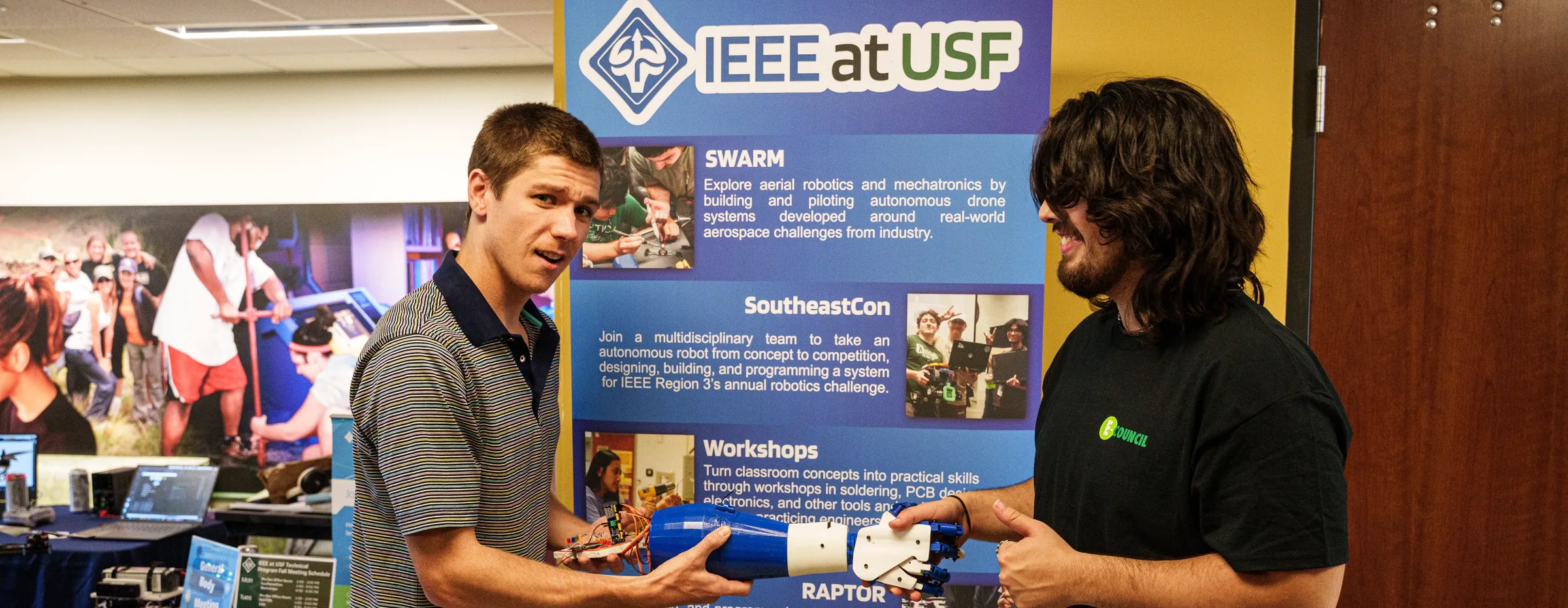
Joint alignment, adjustable segment geometry, cuffs, interfaces, load paths, and practical don-and-doff access.
Real-time sensing, gait-state reasoning, bounded commands, watchdogs, software limits, and synchronized logging.
Bench-first testing, traceable requirements, interface reviews, test evidence, and responsible separation from human research.
A distributed stack keeps sensing, real-time control, high-level computation, actuation, and hardware power isolation in clearly defined roles.
EXO connects research and requirements to hardware, embedded software, fabrication, and verification. No subsystem succeeds in isolation.
Fit, powered-joint alignment, adjustable thigh and shank geometry, cuffs, mounts, load paths, passive ankle packaging, fabrication drawings, and assembly access.
Protected power distribution, connectors, harnessing, CAN physical layer, current and thermal sensing, precharge, and hardware E-stop architecture.
Signal processing, state estimation, gait-state logic, bounded motor commands, software limits, watchdogs, fault handling, telemetry, and repeatable logging.
Biomechanics, literature review, technology comparison, concept evaluation, requirements, future systems, and validation planning.
Interface control, design reviews, supported bench tests, acceptance criteria, fault-response checks, as-built documentation, and traceable evidence. Every workstream converges here before the system moves forward.
A concise portfolio of the systems IEEE at USF members are developing now and the prototypes the team has already built, demonstrated, and documented.
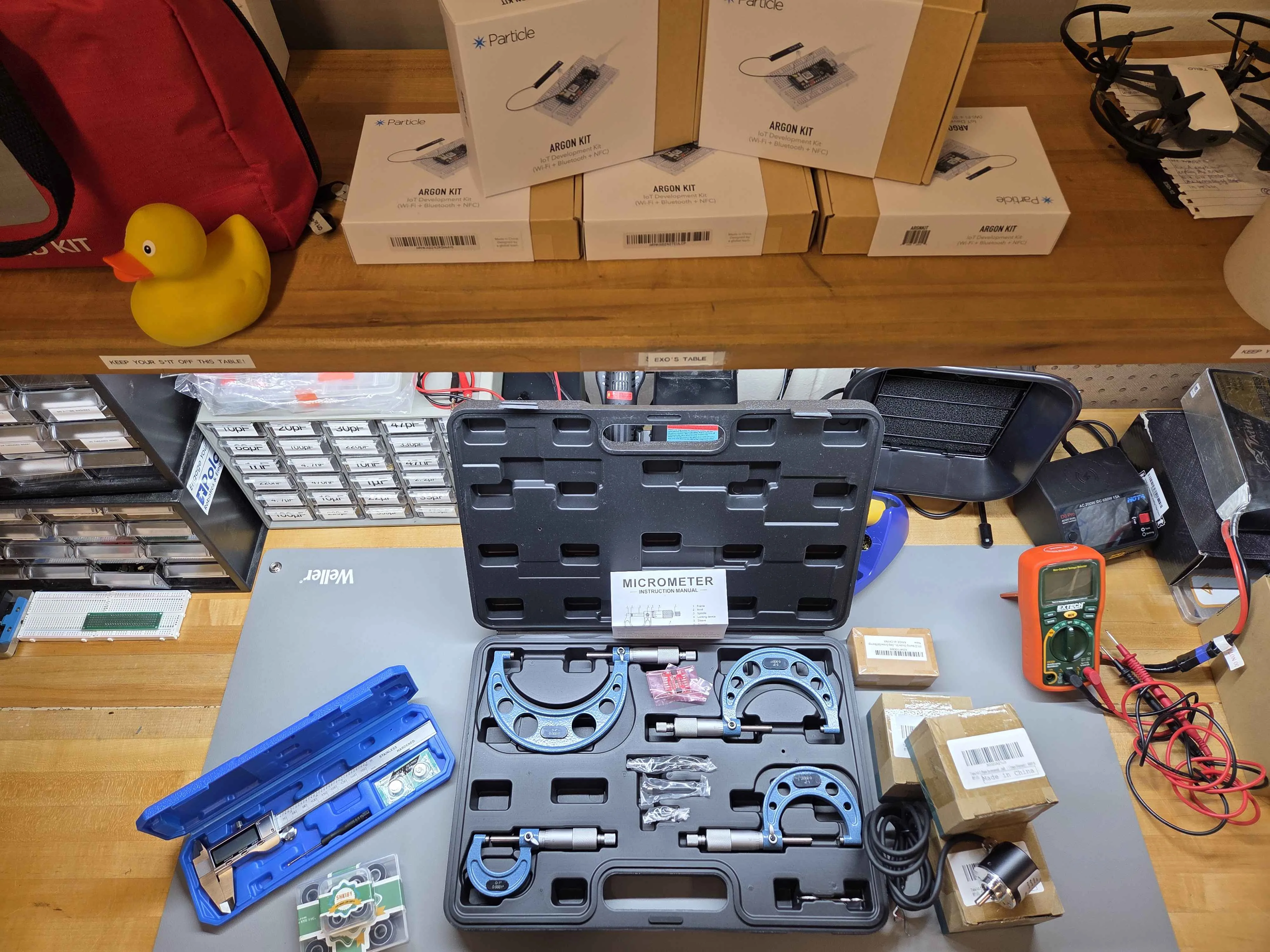
A right unilateral, sagittal assistive development assembly with powered hip and knee joints, a passive ankle, embedded sensing, distributed real-time control, CAN communication, and bench-first verification.
Current working hardware: 2× Teensy 4.1, 1× Jetson Orin Nano, and 2× CubeMars AK80-9 actuators. This is an engineering development platform—not a released wearable device.
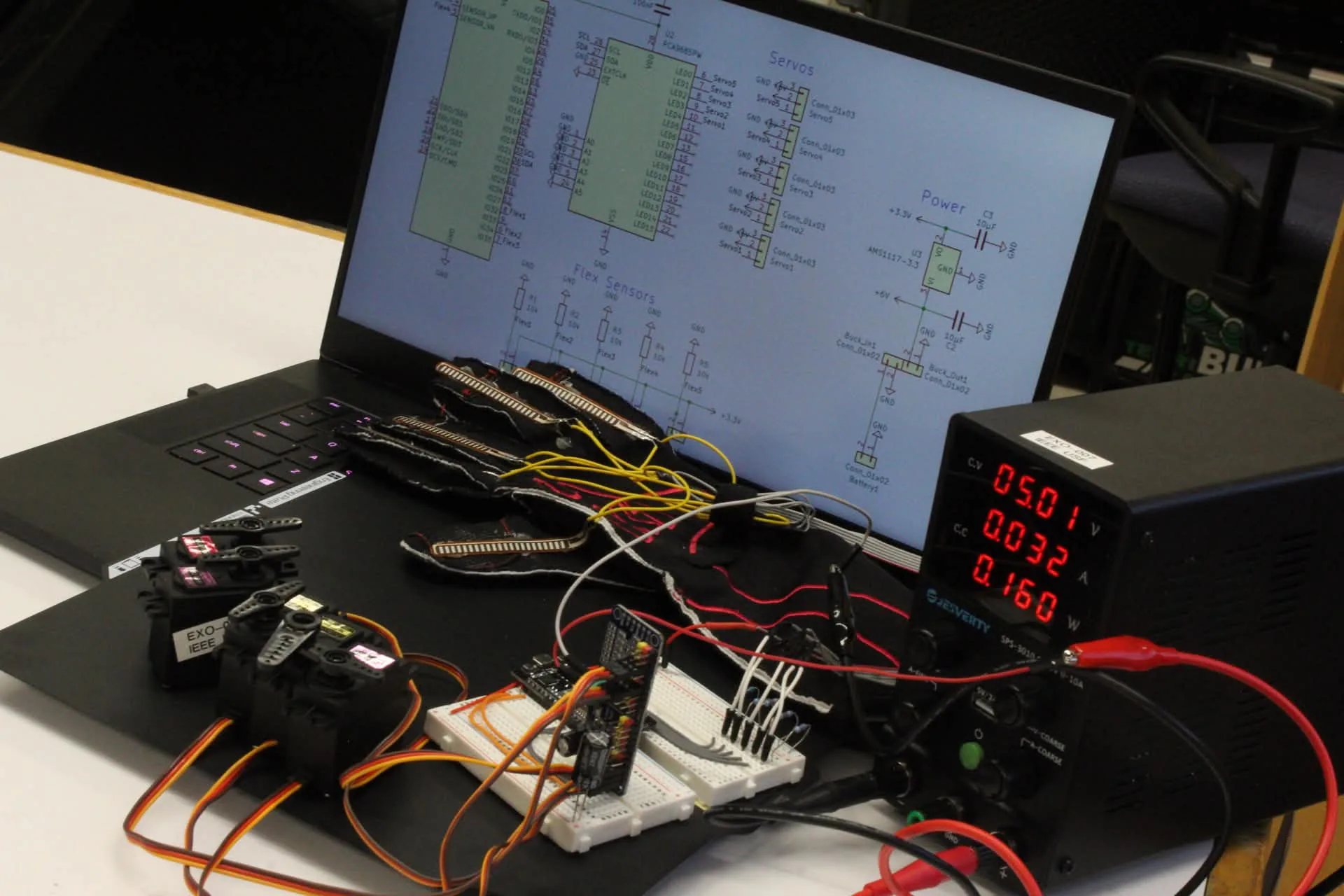
A life-size robotic hand that mirrors an operator’s finger motion from a laptop webcam. MediaPipe tracks 21 landmarks per hand, while Python handles calibration, operating modes, and motion mapping.
Control path: webcam + MediaPipe → Python → ESP32 → PCA9685 → 6× MG996R servos, with five finger channels and an independently calibrated 0–180° wrist. The mechanics use open-source InMoov hand and forearm files.
The roadmap forces requirements, interfaces, bench evidence, and readiness reviews into the build—not after it.
Define fit, functions, boundaries, interfaces, and verification intent.
Turn research into mechanical, electrical, and control decisions.
Expose assumptions, conflicts, risks, and missing evidence.
Complete CAD, schematics, harnessing, logic, and test artifacts.
Validate communication, sensors, limits, power, and isolated functions.
Review detailed readiness before fabrication and integration.
Create the physical development assembly and as-built record.
Confirm fixture, procedure, limits, support, and fault response.
Collect evidence across the assembled system under controlled loads.
Archive results, close gaps, and define the next revision.
The current assembly is an engineering development platform. Bench and fixture work must remain clearly separated from any human-subject activity.
CAD, power, sensing, controls, fixtures, supported bench tests, documentation, and operational limits.
Human motion collection, CARRT access, and Vicon calibration proceed only within written approvals and local authorization.
EXO is built through measurement, controlled interfaces, subsystem bring-up, design review, and the evidence needed to make the next decision.
Bring a discipline and leave with a system-level view. Members can contribute through mechanical design, electrical integration, controls, embedded systems, biomechanics, documentation, and testing.
Support can accelerate responsible development through actuators, sensing, test equipment, fabrication, batteries and power hardware, safety components, technical review, and engineering mentorship.